Itinerary: Santa Cruz Island, Isabela Island, Santa Cruz
Island, San Cristobel Island
If you love nature, animals, volcanic landscapes,
water-related activities and seafood then this is the best place on earth.
Before we start, it is important to point out that for the
first time I outsourced the arranging of the trip to a company called Travel
Local who arranged everything from the flights, boat rides, hotels and
taxi pickups to the adventures, excursions and local guides who were absolutely
amazing. They were very flexible with our interests and availability and
scheduled an incredible trip to our tastes. I am certain you could arrange all
this yourself and save some money but it would be a huge undertaking and the
quality of service was totally worth it. Check out the interactive map below.
San Cristobal 360 tour boat
Secondly, before you enter the Galapagos from Quito airport,
you need do quite a lot of admin, some of which can be done in advance of the
departure gate (1, 2 and 4) and some which need to be done there (3). This is a
list of things you need to arrange before you set foot on the Galapagos:
1: You will need to fill out this
form for a Transit Control Card (TCT) to allow you entry to the
Galapagos Islands ($20 per person)
2: You will then need to fill out the declaration of goods
using this
form (no cost).
3: You then need to take your bags to the Agencia De
Regulaciony Control de le Bioseguridady and get them checked and tagged by
an officer to prove you don’t have any foreign items which may disrupt the
ecosystem on the Galapagos (no cost here but there is often a queue).
4: Withdraw $200 in cash per person travelling to the
Galapagos Islands (under 12s $100 each) for your National Park
entry fee which you will hand to the passport control officer when you
land.
5: Get through airport bag drop, security and boarder
control as normal and enjoy the flight.
To get to the Galapagos Islands you need to fly from either
Quitoor Guayaquil on the Ecuadorian mainland, to Seymour airport on
Baltra Islandor San Cristobel Island airport. Each island has a main
centre where hotels, restaurants and a port can be easily walked to and there
are taxis everywhere to pick you up. Water taxis all cost $1 per person
each way and they will take you to whatever incredible water-based adventure
you’ve got planned. To book an inter-island ferry, the
schedule is here and you can book what you need for $60 per person
each way. Because we flew to Baltra Island which is connected to Santa Cruz via
a 2-minute boat ride and Santa Cruz is in the middle of the three main islands; we had to get 3 ferries in total to be able to see as much as possible in 9
days (Santa Cruz – Isabela, Isabela – Santa Cruz, Santa Cruz – San Cristobal). You
can visit the three main islands in any order you want, just plan ahead with
ferry crossings as they often have set times for departure each day. Below are
the 3 main islands written in the order we visited, plus the uninhabited island
tour.
Sally Lightfoot CrabLava Lizard
Santa Cruz Island
Staying in the town of Puerto Ayora next to the port
is a good place to base yourself for your visit on the island as there are
ferries and taxis a plenty, not to mention you’ll be greeted by a colony of
friendly (and sleepy) Sea Lions. Our flight landed on Baltra Island to the
north of Santa Cruz where we caught a quick water taxi to the shore before
heading to the El Chato Ranch Giant
Tortoise Reserve ($10 per person) a 25-minute taxi ride away.
There were dozens of Giant Tortoises just wandering around the beautifully kept
wildlife reserve alongside all manner of indigenous birds and a lovely
restaurant for lunch. After this, we went straight to the Charles Darwin Research Centre
half-an-hour away which is free to enter but you might need a specific
time slot to visit so check their website if you don’t book with an agency. Here
you’ll meet marine iguanas, baby sea turtles and the taxidermy remains of Lonesome
George, the last Pinta Island tortoise, in an air-conditioned room
designed to preserve his body forever. There is wildlife all over the island so
we spent the evening walking along the coastline marvelling at the crabs, sea
lions, turtles and sea birds everywhere we looked.
Tortoise at the El Chato Ranch - Santa Cruz
The next day, we walked down to Tortuga Bay Beach
which takes 40-minutes from the centre of Puerto Ayora and starts here at the Centro
de Energia Renovable. Once you’ve walked the path of shady trees, the ocean
eventually reveals itself along with bright white sand on a beach that is
incredibly popular with surfers (and you can see why). Walking 1km or so along
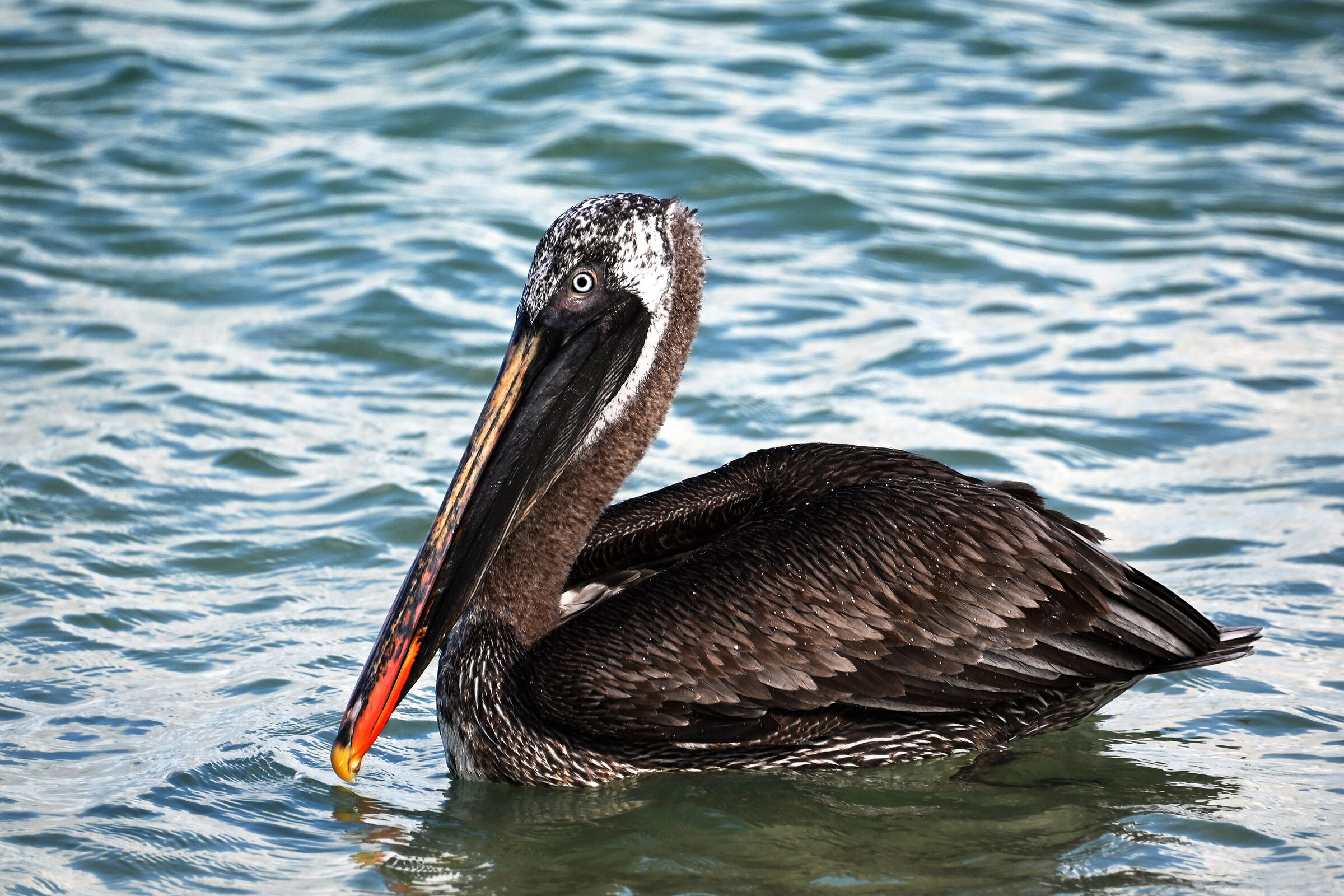
the idyllic sand beach, we spotted wildlife everywhere, including pelicans
fishing for their breakfast on the open ocean, sandpipers trying to avoid the
wash of the waves and Sally Lightfoot crabs scurrying down into their burrows.
If this isn’t enough, after 25-minutes, Playa Mansa (a
sheltered bay full of mangroves) reveals itself where white-tip reef sharks,
eagle rays and sea turtles hang out in the incredibly warm and calm waters. We
swam and hired a kayak for 2 hours ($10 an hour per person) before
heading back into the town for lunch. In the afternoon we caught a water taxi ($1
each way) across the harbour and walked along Playa los Alemanes
which leads to Las
Grietas($10 each), one of the best snorkelling spots on the
island but you must have a guide lead you while you’re there.
Tortuga Bay Beach - Santa CruzFlying Pelican on Tortuga Beach - Santa Cruz
On our third day, we arranged surfing lessons($100 for 3 hours) down at Tortuga Bay Beach where we learned how to
catch waves in the 25°C water which was absolutely amazing. Our guide was great
and the company managed to fit us in last minute which was amazing. On our last
day on Santa Cruz, we visited Izla Plaza Sur, an
uninhabited island off the east coast. We were booked onto a full-day
tour($365 each) which included great food, a luxurious boat
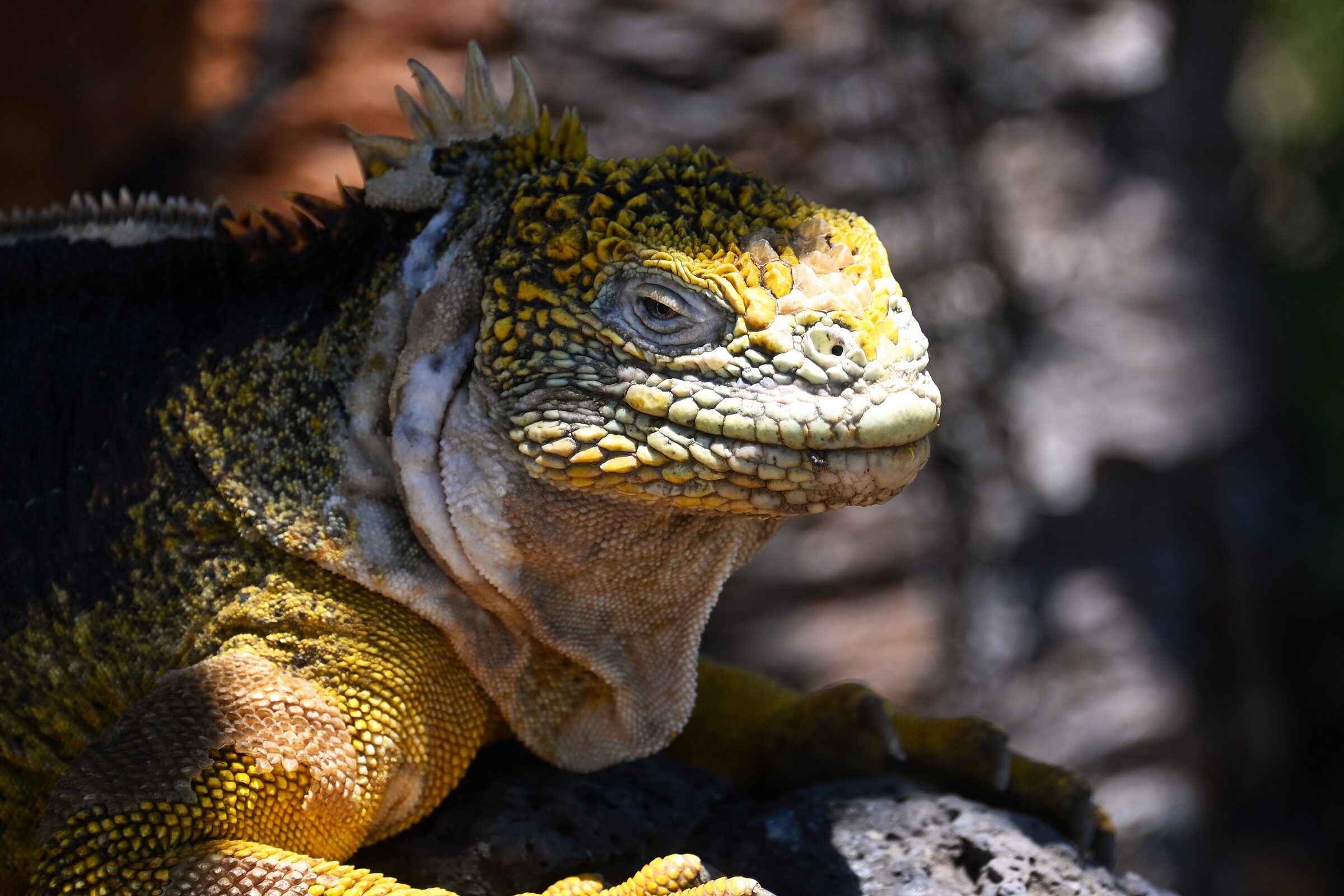
with crew, snorkelling gear and a guided tour of the island where we saw yellow
land iguanas, blue footed boobies, sea lions and frigate birds among the tall
cacti on this enchanting, uninhabited island. The place was incredibly special
and a real highlight among many, in particular the snorkelling after the visit
to the island was incredible. The sea was warm and clear and we swam with sea
turtles, reef fish and sting rays.
Cacti - Isla Plaza SurFighting Land Iguanas - Isla Plaza Sur
Isabela Island
The only way to get to Isabela Island is via ferry
from Santa Cruz (twice daily,
7am and 3pm $60 per person) as there is no airport on the island. The
ferry crossing can be really choppy and lasts for 2 hours so my advice is to
not eat much before you get on board and be prepared to be uncomfortable (try
staring at the horizon, this helps a bit). Upon arrival, you’ll also notice how
much smaller the main town of Puerto Villamil is compared to Puerto
Ayora which brings with is fewer restaurants and places to stay so plan
this well in advance. We were booked onto a tourto the Tintoreras islands ($90 each) which included a walk around
the volcanic rocky islets to see all the iguanas and sea birds and an hour
snorkelling around the clear, warm waters. The next day, we booked onto hiking
tour to climb up Sierra
Negra volcano ($70 per person) which takes 2 hours each way through
enchanting trees and fairly easy terrain until you stumble across a view of the
largest caldera in the Galapagos (10km across) amongst lava lizards and Darwin
finches. There are a few hiking tour groups to difference volcanoes so shop
around but this hike was pretty easy and didn’t require too much in terms of
fitness.
Sea turtleSea turtleForest on the Sierra Negra volcano hikeMockingbird on Sierra Negra volcano
San Cristobal
We headed to San Cristobal Island for our last stop on a ferry ride($60 each, twice daily from Santa Cruz, 7am and 3pm) and were picked up
at midday for our Lobos
Islands tour ($270 per person, 5 hours trip). We headed north up
the coast to Isle Lobos to see the blue footed boobies nesting alongside a
colony of sea lions (including some very cute baby ones) before we spent 2 hours
snorkelling in the most incredibly clear blue water imaginable. It was here
that a playful sea lion spent half-an-hour with us underwater, creating one of my
favourite memories from the trip.
On our final day in the Galapagos, we booked onto the San
Cristobal 360 tour ($360 per person) which included a stop with
a wet landing at Rosa
Blanca Bay to snorkel in the crystal clear lagoon which included up-close
and personal meetings with white-tip reef sharks, seat turtles and sting rays.
From there we headed north and around Punta Pitt in what
were quite rough seas before circling round the top of the island where the
waves were not as vigorous. From there we headed south towards Kicker Rock and an
incredibly special snorkelling experience. The water here was colder and the
sea much rougher and it does require a good level of swimming ability here due
to the challenging waves. Once through the gap, we swam alongside the cliffs
descending into the ocean and saw shoals of reef fish, black-tip reef sharks,
sea turtles and a large colony of sea lions hanging out on the sheer cliffs. An
incredible end to the trip and something that was worth the choppy seas of the
morning boat ride.
Kicker Rock - San Cristobal 360 tour
We returned to the mainland via a flight out of San Cristobal
airport the next day and spent a couple of days in Quito. The Galapagos Islands
has to be the best place I’ve ever visited, and despite the difficulty (and
cost) of getting there; it is totally worth the effort. Use our advice or not, remember: it’s what you know, not who you know.